Pulse — OpenAI terminates employee for violating internal policies by using confidential information in prediction market trades
The Pulse
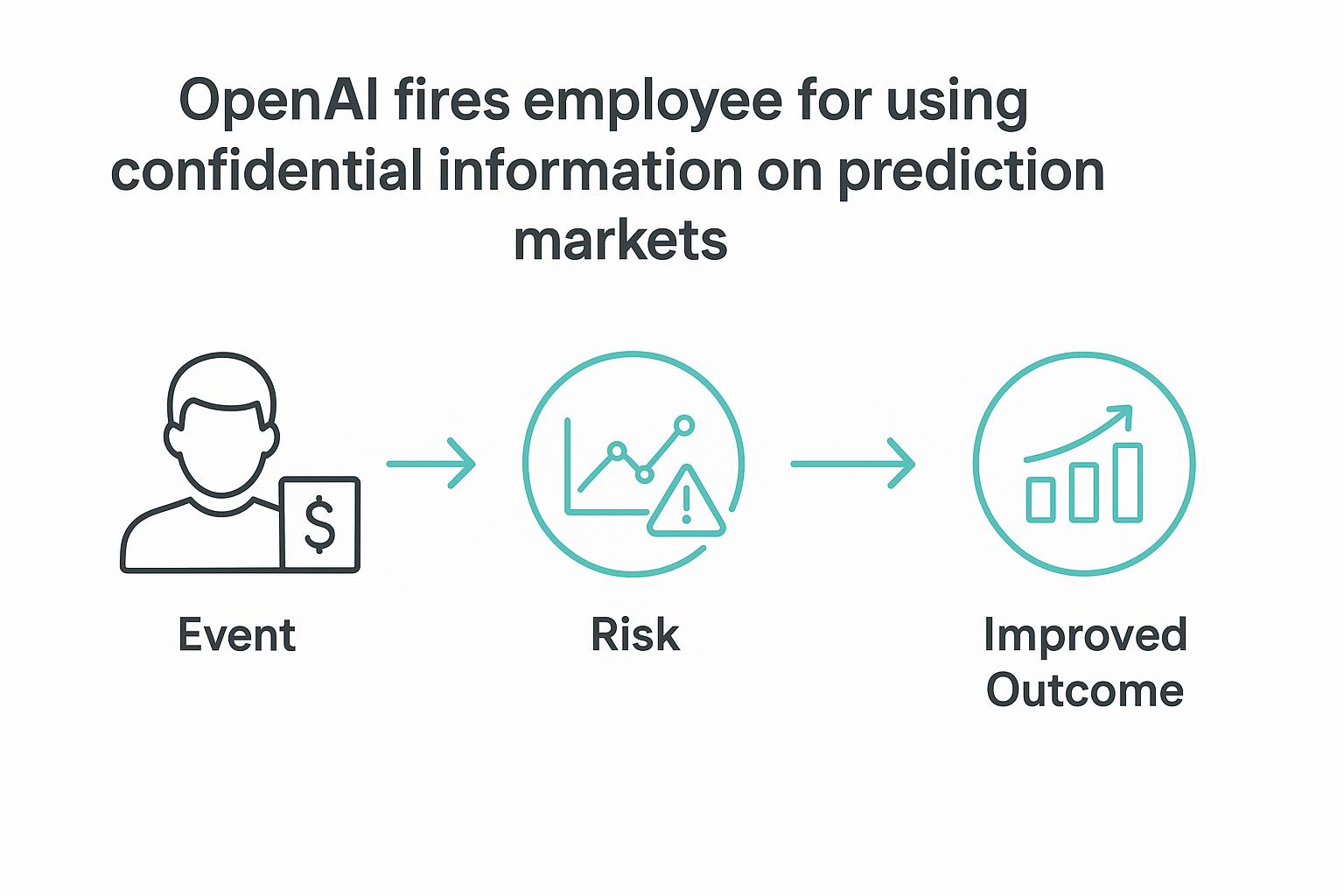
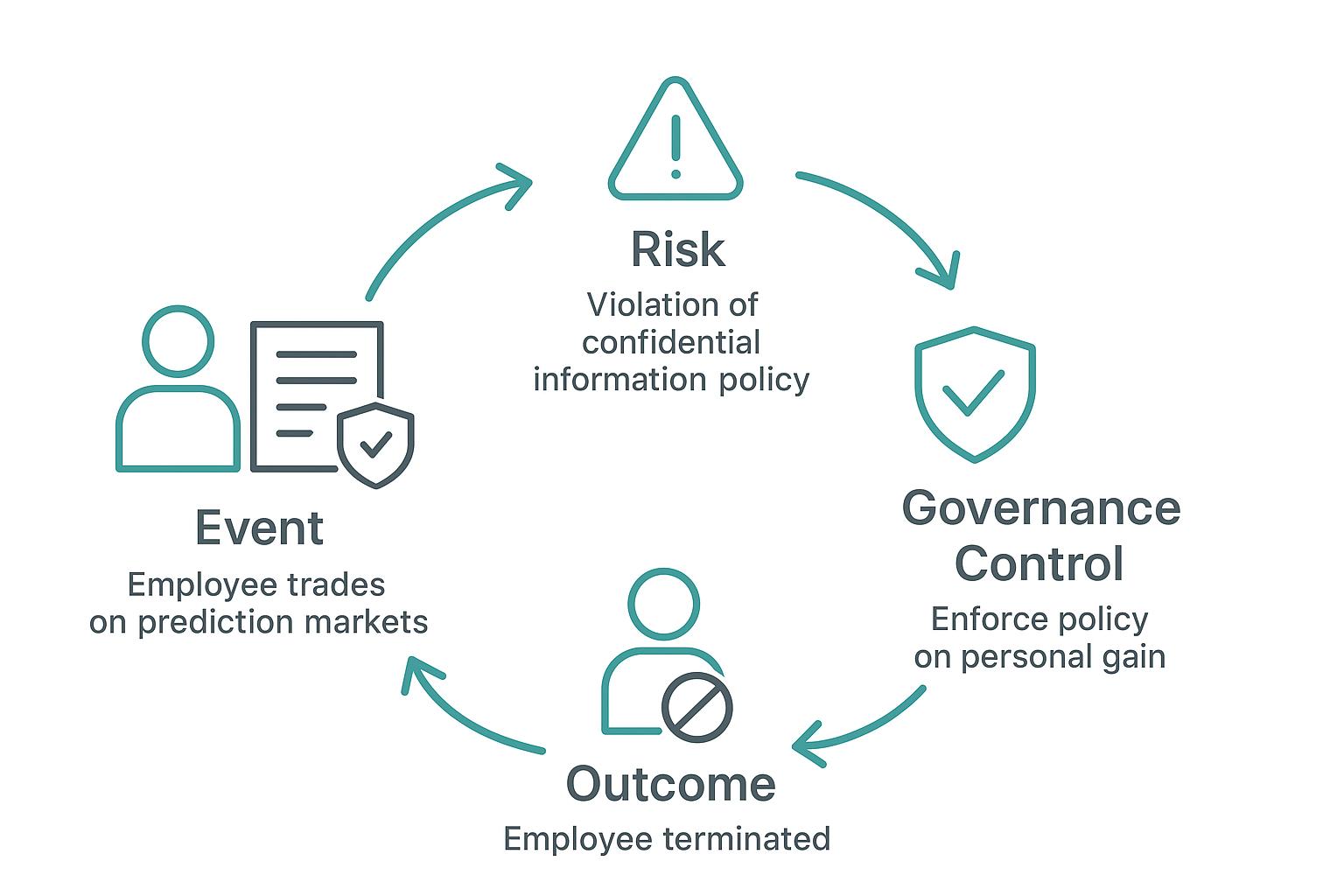
OpenAI terminated an employee for trading on prediction markets using confidential company information, violating internal policies designed to prevent insider trading and misuse of sensitive data.
Source: TechCrunch (Main)
What Happened?
An OpenAI employee engaged in trading on prediction markets by leveraging confidential information obtained through their role. This conduct breached OpenAI’s internal policies prohibiting the use of non-public information for personal financial gain. The company responded by firing the employee to enforce compliance and uphold data confidentiality standards.
What Are The Risks Involved?
Classification: Insider threat and confidential data misuse
Primary risk vector: Unauthorized use of sensitive internal information for personal benefit
|
Risk
|
Mechanism in this event
|
Impact
|
Mandatory vs Contextual
|
|
Insider data leakage
|
Employee accessed and exploited confidential info
|
Financial loss, reputational damage
|
Mandatory
|
|
Conflict of interest
|
Personal trading based on privileged knowledge
|
Erosion of trust, legal exposure
|
Mandatory
|
|
Policy enforcement failure
|
Potential gaps in monitoring or preventing insider trading
|
Recurrence of violations, compliance risk
|
Mandatory
|
|
Insufficient audit trails
|
Lack of real-time detection of unauthorized data use
|
Delayed incident response, unresolved risk
|
Contextual
|
Who Is Affected?
- Strategy / Business / Product Owners:
Impacted by potential reputational damage and loss of stakeholder trust. They inherit risks related to insufficient controls over sensitive information and must approve policies that restrict insider trading.
- Data, Privacy & Legal Teams:
Responsible for defining confidentiality boundaries and legal compliance. They face risks of regulatory penalties if insider trading laws are violated and must enforce contractual and policy obligations.
- AI Engineering & Architecture:
May inadvertently expose confidential data through system design. They must implement technical controls to restrict data access and monitor usage patterns.
- Responsible AI / Human Oversight:
Accountable for ensuring ethical use of AI-related information. They detect policy breaches and escalate incidents, owning oversight mechanisms.
- Cybersecurity / DevSecOps:
Tasked with monitoring data flows and access logs to detect insider threats. They implement runtime controls and audit trails.
- Risk, Compliance & Incident Response:
Own incident detection and response processes. They manage risk assessments and enforce corrective actions post-incident.
- Audit & Assurance:
Validate effectiveness of controls and policy adherence through audits. They identify gaps and recommend improvements.
- End Users / Impacted Stakeholders:
Indirectly affected by erosion of trust in OpenAI’s governance and data stewardship.
AI governance is a shared responsibility across these groups. Failures often emerge at handoffs and unmonitored data access points, underscoring the need for cross-functional collaboration. AI Policing AI communities can facilitate shared learning and accountability alignment to prevent insider misuse.
Why This Matters for AI Governance?
This event highlights governance tension between data confidentiality and employee autonomy. Insider misuse of confidential AI-related information complicates accountability and post-deployment oversight. Without robust controls, sensitive AI development insights can be exploited, increasing legal and reputational risks. This incident underscores the necessity of embedding enforceable governance mechanisms that monitor and restrict internal data use, aligned with frameworks like NIST AI RMF emphasizing risk management and human oversight.
How Governance Frameworks Apply (Practical)?
- NIST AI Risk Management Framework: Govern and map internal data access; measure insider threat risk; manage through policy enforcement and monitoring controls with audit logs.
- ISO/IEC 42001: Implement management systems that define roles, responsibilities, and approval gates for confidential data handling.
- OECD AI Principles: Promote accountability by assigning clear ownership for data confidentiality and insider threat mitigation.
- NIST CSF 2.0: Apply cybersecurity controls to detect and respond to unauthorized data access and insider trading attempts.
- Model Cards / Audit Trails: Maintain detailed logs of data access and usage to enable traceability and incident investigation.
What Needs to Be Built Next (Controls Blueprint)?
|
Control
|
Purpose
|
Lifecycle Stage
|
NIST AI RMF Function
|
Mandatory vs Contextual
|
Evidence / Artifact
|
|
Insider Trading Policy Enforcement
|
Prevent use of confidential info for personal gain
|
Deployment
|
Manage
|
Mandatory
|
Signed policy acknowledgments
|
|
Access Control Mechanisms
|
Restrict confidential data access to need-to-know
|
Design & Deployment
|
Govern
|
Mandatory
|
Role-based access logs
|
|
Real-time Monitoring & Alerts
|
Detect suspicious data access or trading activity
|
Operation
|
Measure
|
Mandatory
|
Security event alerts
|
|
Audit Trail & Logging
|
Maintain detailed records of data usage
|
Operation
|
Measure
|
Mandatory
|
Immutable audit logs
|
|
Incident Response Plan
|
Define steps for insider threat detection and action
|
Operation
|
Manage
|
Mandatory
|
Incident reports
|
|
Employee Training & Awareness
|
Educate staff on confidentiality and insider risks
|
Pre-deployment
|
Govern
|
Contextual
|
Training completion records
|
|
Separation of Duties
|
Reduce conflict of interest by role segregation
|
Design
|
Govern
|
Contextual
|
Role definitions
|
|
Periodic Compliance Audits
|
Verify adherence to insider trading policies
|
Operation
|
Measure
|
Contextual
|
Audit findings
|
The Build — Governance by Design
Document-based governance alone fails because policies without embedded enforcement allow insider misuse to persist undetected. Controls must be integrated into system design and operational workflows before deployment. This includes technical access restrictions, real-time monitoring, and automated audit trails that enforce policy at runtime. Clear accountability boundaries and incident response mechanisms must be codified and executable within the AI ecosystem. Execution-level controls that prevent, detect, and respond to insider threats are essential to uphold confidentiality and trust.
Governance that cannot be enforced at runtime is not governance.