Pulse — Trump is using AI to fight his wars – this is a dangerous turning point Chris Stokel-Walker
The Pulse
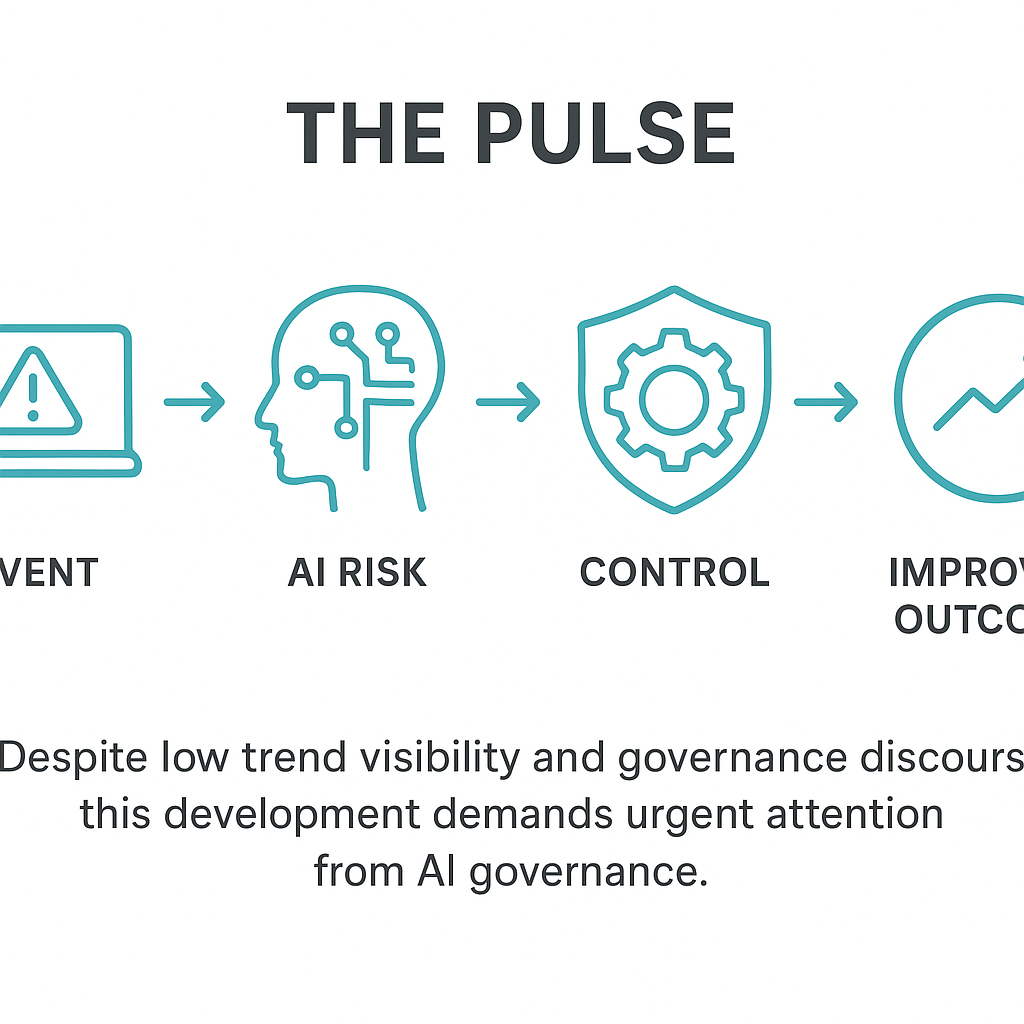
A recent Guardian commentary highlights former President Donald Trump's use of artificial intelligence (AI) in military contexts, signaling a potentially dangerous shift in how AI is integrated into warfare. Despite low trend visibility and governance discourse, this development demands urgent attention from AI governance professionals.
Source: The Guardian
What Happened?

Chris Stokel-Walker’s article discusses Trump’s deployment of AI technologies to support military operations, framing it as a critical turning point. The piece warns of escalating risks as AI tools become embedded in conflict decision-making and combat strategies, potentially bypassing traditional oversight and ethical considerations.
What Are The Risks Involved?
Classification: Militarization of AI introduces high-stakes operational and ethical risks.
Primary Risk Vector: Autonomous or semi-autonomous AI systems influencing or executing military actions without sufficient human control or transparency.
Risk |
Mechanism in this event |
Impact |
Mandatory vs Contextual |
Loss of human oversight |
AI systems making or supporting lethal decisions |
Unintended escalation, civilian harm |
Mandatory |
Ethical and legal ambiguity |
Lack of clear frameworks governing AI in warfare |
Violations of international law |
Mandatory |
Accountability gaps |
Difficulty tracing decisions to human actors |
Challenges in assigning responsibility |
Mandatory |
Escalation of conflict |
AI-driven rapid response increasing conflict risks |
Heightened geopolitical instability |
Contextual |
Bias and error in AI models |
Flawed data or algorithms influencing military ops |
Wrongful targeting, collateral damage |
Mandatory |
Who Is Affected?
- Military personnel relying on AI tools for operational decisions.
- Civilians in conflict zones exposed to AI-driven military actions.
- Governments and international bodies responsible for conflict regulation.
- AI developers and defense contractors involved in creating military AI systems.
Why This Matters for AI Governance?
The militarization of AI without robust governance frameworks risks undermining ethical standards, human rights, and international security. It exposes critical gaps in accountability, transparency, and control that AI governance must urgently address to prevent misuse and unintended consequences.
How Governance Frameworks Apply (Practical)?
Existing AI governance frameworks, such as the NIST AI Risk Management Framework (AI RMF), emphasize human oversight, transparency, and risk assessment—principles that are crucial in military AI deployment. However, the unique context of warfare demands enhanced controls around ethical use, compliance with international humanitarian law, and real-time monitoring of AI behavior to mitigate risks.
What Needs to Be Built Next (Controls Blueprint)?
Control |
Purpose |
Lifecycle Stage |
NIST AI RMF Function |
Mandatory vs Contextual |
Evidence / Artifact |
Human-in-the-loop mechanisms |
Ensure human oversight on AI military decisions |
Operation |
Respond, Govern |
Mandatory |
Audit logs, decision review protocols |
Ethical compliance frameworks |
Align AI use with international law and ethics |
Design, Operation |
Govern |
Mandatory |
Compliance reports, ethical guidelines |
Transparency and explainability |
Make AI decision processes interpretable |
Design, Operation |
Analyze, Govern |
Mandatory |
Model documentation, explainability tools |
Accountability tracking |
Trace decisions to responsible individuals |
Operation |
Govern |
Mandatory |
Incident reports, chain-of-command logs |
Real-time risk monitoring |
Detect and mitigate emergent AI risks |
Operation |
Detect, Respond |
Contextual |
Monitoring dashboards, anomaly alerts |
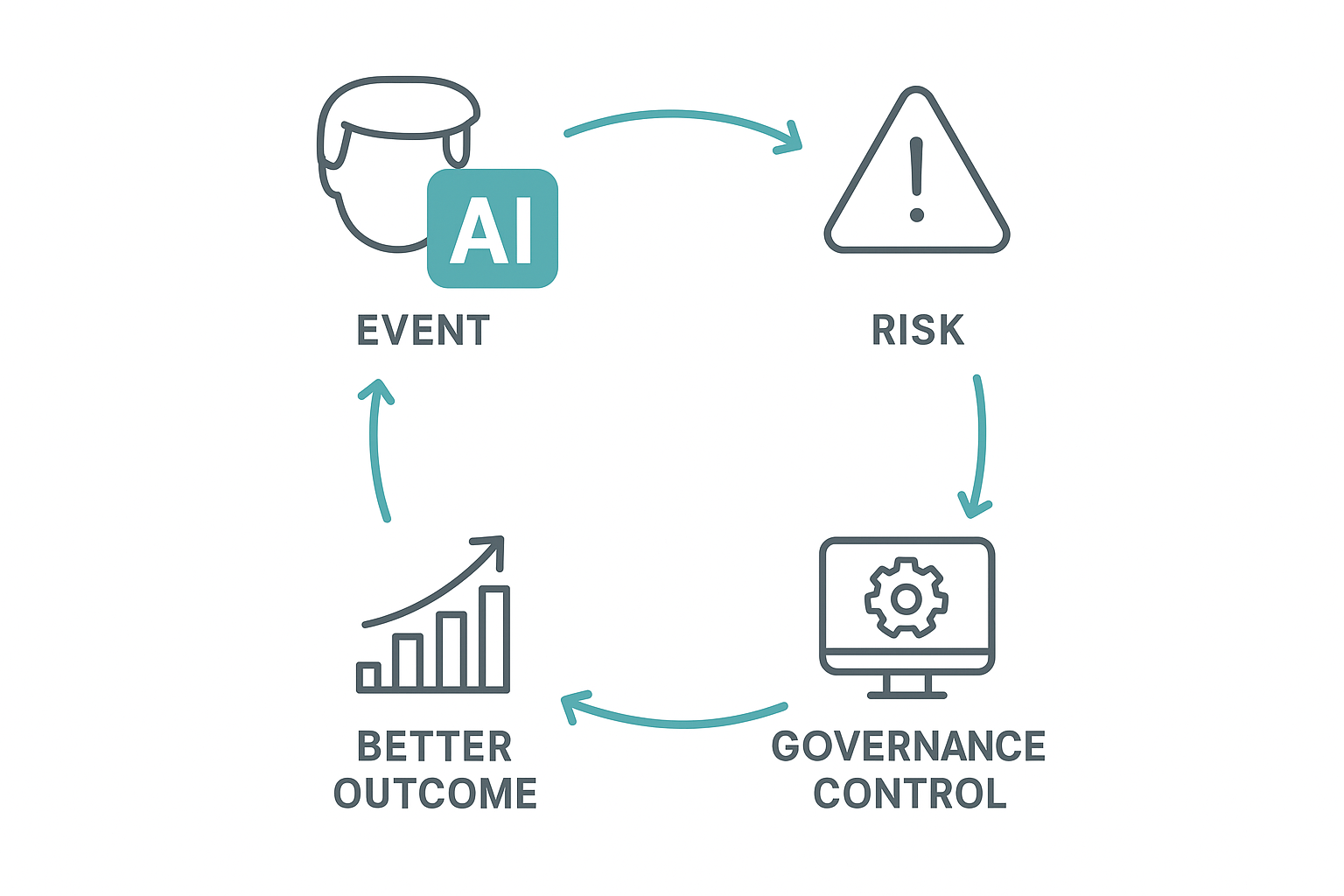
The Build — Governance by Design
To govern AI in military contexts effectively, governance must be embedded from the earliest design stages through deployment and operation. This includes integrating human oversight, ethical compliance, transparency, and accountability mechanisms directly into AI systems and operational protocols. Continuous risk monitoring and rapid response capabilities are essential to manage dynamic battlefield conditions. Without enforceable runtime governance, these controls risk becoming theoretical rather than practical safeguards.
Governance that cannot be enforced at runtime is not governance.