Pulse — Google employees call for military limits on AI amid Iran strikes, Anthropic fallout
The Pulse
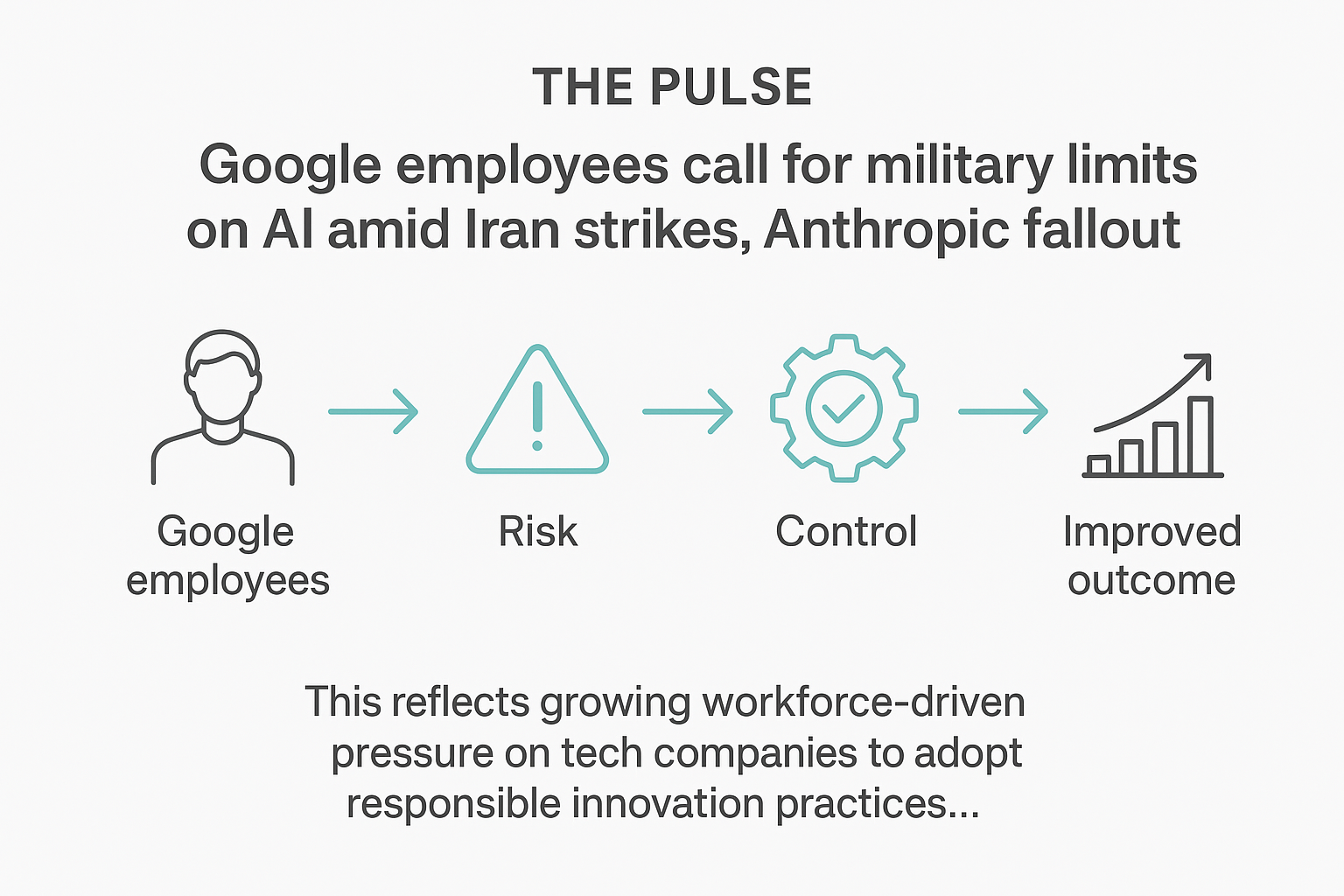
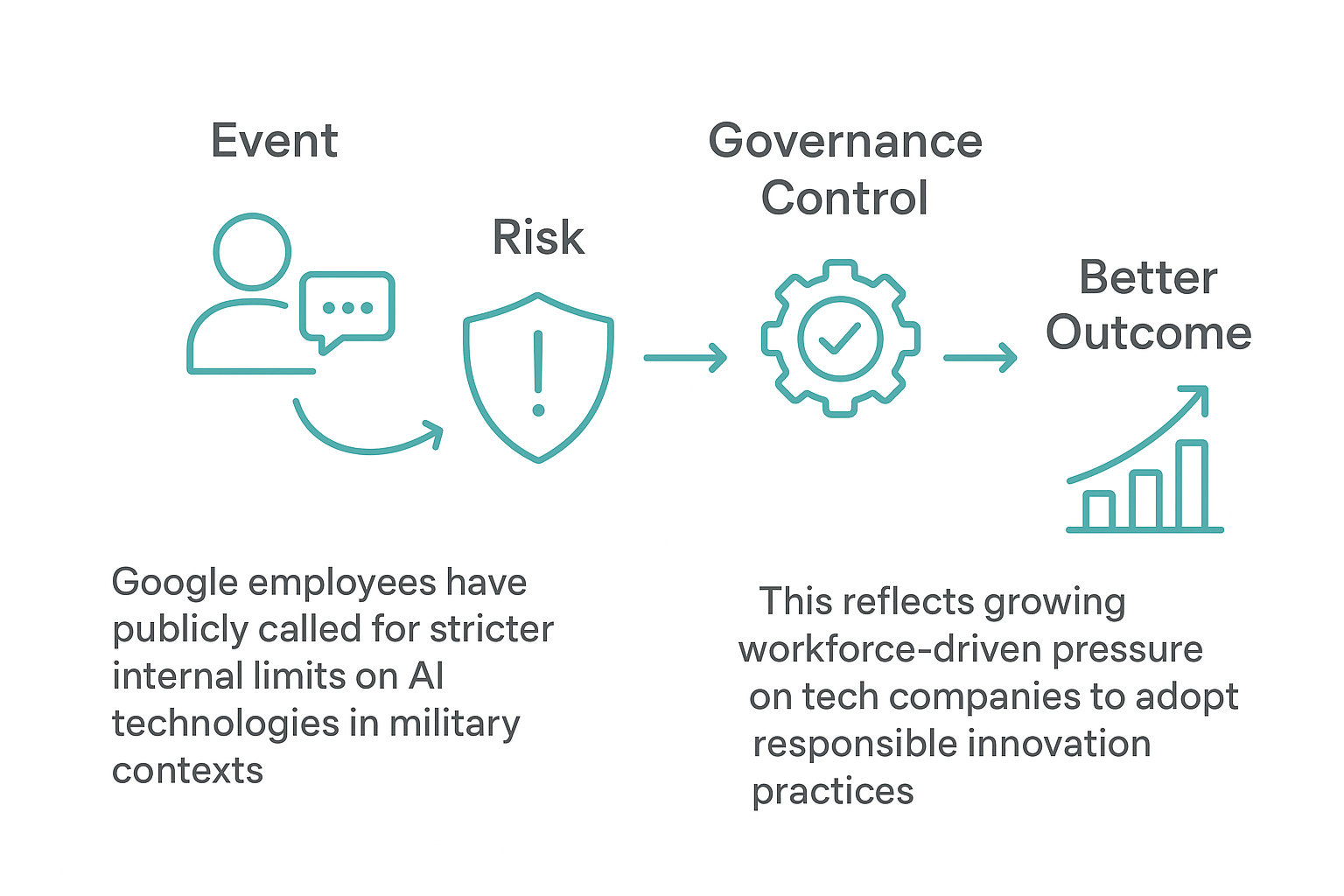
Google employees have publicly called for stricter internal limits on the use of AI technologies in military applications, triggered by recent geopolitical tensions involving Iran and the fallout from controversies surrounding Anthropic, an AI company. This reflects growing workforce-driven pressure on tech companies to adopt responsible innovation practices and enforce ethical boundaries on AI deployment in conflict scenarios.
Source: CNBC
What Happened?
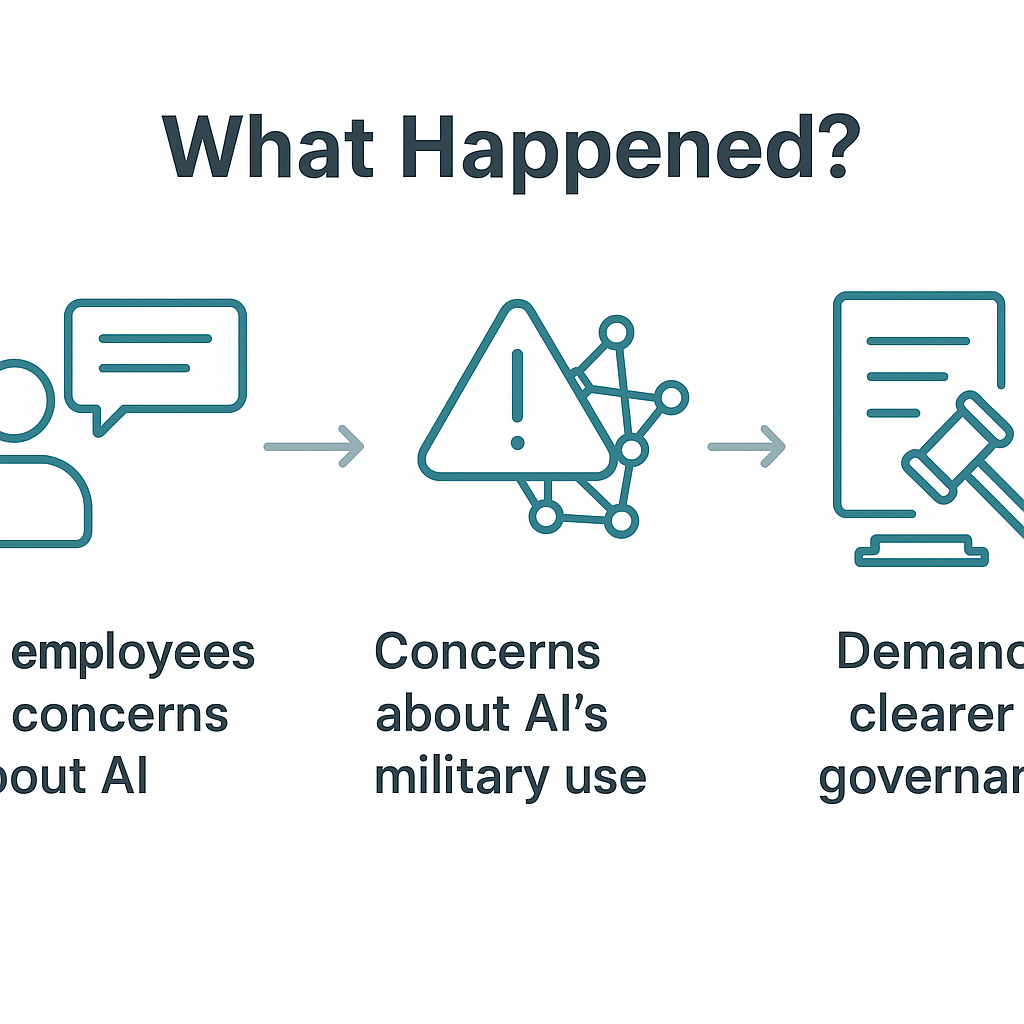
Amid escalating military strikes involving Iran, Google employees voiced concerns about the company’s AI technologies potentially being used in warfare or military intelligence. This internal push coincides with reputational and ethical challenges faced by Anthropic, a prominent AI developer, which has recently encountered fallout related to its AI applications. The employee activism highlights a demand for clearer governance policies restricting AI’s military use and ensuring human oversight.
What Are The Risks Involved?
Classification: Governance gap with potential safety and ethical implications
Primary risk vector: Unrestricted or insufficiently governed AI deployment in military contexts leading to unintended harm or ethical breaches
Risk |
Mechanism in this event |
Impact |
Mandatory vs Contextual |
Ethical misuse of AI |
Lack of explicit internal policies limiting military use |
Reputational damage, societal harm |
Contextual |
Insufficient human oversight |
AI systems deployed without adequate human-in-the-loop |
Safety incidents, loss of control |
Mandatory |
Workforce disengagement |
Employee distrust due to opaque governance |
Talent loss, reduced innovation |
Contextual |
Regulatory scrutiny |
Potential non-alignment with emerging AI governance laws |
Legal penalties, operational restrictions |
Contextual |
Who Is Affected?
- Google and Anthropic employees: Facing ethical dilemmas and demanding governance clarity
- Tech companies developing AI: Under pressure to define and enforce military-use boundaries
- Governance and compliance teams: Need to respond to workforce and public concerns with actionable policies
- End users and society: Potentially impacted by AI-enabled military actions lacking accountability
Why This Matters for AI Governance?
This event underscores the critical need for AI governance frameworks that explicitly address high-risk use cases such as military applications. It highlights the importance of embedding ethical guardrails, transparency, and human oversight to maintain trust and align AI deployment with societal values. Employee activism serves as an early warning signal for governance gaps that could escalate into safety, ethical, and regulatory crises.
How Governance Frameworks Apply (Practical)?
- EU AI Act: Military AI applications likely fall under high-risk categories requiring strict conformity assessments, transparency, and post-market monitoring.
- OECD AI Principles: Emphasize human-centered values and accountability, reinforcing the need for human oversight in military AI use.
- NIST AI RMF: Provides a structured approach to map, measure, manage, and govern AI risks, applicable to defining controls around military use cases.
- ISO/IEC 23894: AI risk management standards can guide identification and mitigation of risks specific to military AI deployments.
What Needs to Be Built Next (Controls Blueprint)?
Control |
Purpose |
Lifecycle Stage |
NIST AI RMF Function |
Mandatory vs Contextual |
Evidence / Artifact |
Military Use Restriction Policy |
Define and enforce limits on AI military use |
Design & Deployment |
Govern |
Contextual |
Policy documents, employee training |
Human-in-the-Loop Mechanisms |
Ensure human oversight on AI decisions in military contexts |
Operation |
Manage |
Mandatory |
System design specs, audit logs |
Ethical Impact Assessments |
Evaluate potential societal and ethical risks |
Development & Deployment |
Measure |
Contextual |
Assessment reports, risk registers |
Employee Feedback Channels |
Capture workforce concerns and governance input |
Operation |
Govern |
Contextual |
Feedback logs, governance meeting notes |
Transparency Reporting |
Public disclosure of AI use cases and governance |
Post-market Monitoring |
Govern |
Contextual |
Transparency reports, compliance filings |
The Build — Governance by Design
To address the governance gaps revealed by employee activism and geopolitical risks, organizations must embed military-use restrictions and human oversight into AI systems from inception through deployment and monitoring. This includes codifying ethical policies, implementing technical controls for human-in-the-loop, and maintaining transparent communication with stakeholders. Employee engagement mechanisms must be institutionalized to surface governance concerns proactively.
Governance that cannot be enforced at runtime is not governance.